
Jigs & Fixtures
Precision Solutions for Every Production Line
Jigs and fixtures are specialized manufacturing tools designed to accurately guide cutting tools or securely hold a workpiece in a consistent position. They are crucial for mass production because they reduce the need for manual measurement and alignment, thereby increasing speed, accuracy, and consistency.
We are able to manufacture and supply these solutions tailored specifically to your needs.
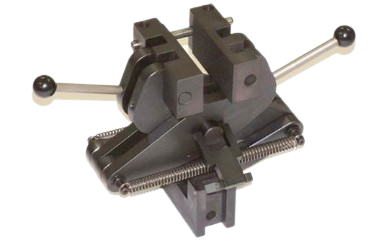
Fixtures
Fixtures only hold, support, and locate the workpiece in a fixed position. They do not guide the tool, which is usually controlled by the machine itself. Fixtures are common in milling, welding, grinding, and assembly operations.
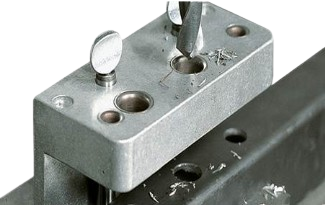
Jigs
Jigs both hold the workpiece and guide the cutting tool (e.g., a drill bush guiding a drill bit to a specific location). They are typically used in drilling, reaming, and tapping operations.
Advantages of using jigs and fixtures
- Increased productivity: By eliminating the need for repeated workpiece alignment, setup time is significantly reduced.
- Improved accuracy: Both devices ensure that each part is manufactured to consistent specifications, minimising errors.
- Reduced cost: Faster production times and fewer rejected parts lead to lower manufacturing costs.
- Fewer skill requirements: By automating repetitive positioning, jigs and fixtures allow less-skilled operators to perform complex tasks.
- Enhanced safety: Jigs hold the workpiece securely and keep operators' hands away from cutting tools.
3D Printing
In addition to traditional manufacturing methods, we also utilise in-house 3D printing to produce custom jigs and fixtures quickly and cost-effectively. This allows us to rapidly prototype or manufacture lightweight tooling tailored to specific processes or components. 3D-printed jigs and fixtures are particularly well suited to applications such as assembly aids, part location guides, checking fixtures, protective holding nests, and repeatable positioning tools where drilling or heavy cutting loads are not required.
Additive manufacturing (3D printing) enables shorter lead times, lower tooling costs for low-volume applications, and easy design iteration. Plastic jigs can also be beneficial where a softer contact surface is preferred, helping to prevent damage or marking on finished parts while still maintaining accurate and repeatable positioning.