


Subcomponents
Dealing with several suppliers for one finished part can be time-consuming, which is why Clamcleats Ltd. sources subcomponents for many of its customers.
We can use your suppliers or activate our own network from which we source die-castings, turned parts, metal inserts, electrical sockets, textiles, ropes, and many other components.
Overmoulding
Plastic overmoulding is an injection moulding process where one material is moulded over another to create a single, integrated component.
The technique is commonly used to combine rigid plastics with softer materials such as elastomers to improve grip, durability, and product performance.
Step-by-Step Process
1. Moulding the base component (substrate)
The first material is injected into a mould cavity to form the base part, known as the substrate. After the mould is filled, the material is allowed to cool and solidify so the part maintains its shape.
2. Transferring the substrate to the overmoulding tool
Once the base component is formed, it is positioned inside a second mould designed for overmoulding. This transfer can be done manually, semi-automatically, or fully automatically. In fully automated systems, the part is often transferred directly between cavities within the same machine in a single continuous process.
3. Injecting the second material
A second material is injected into the mould around or onto the substrate. This material bonds to or encapsulates specific areas of the base component, creating a single integrated part with multiple material layers.
This process produces strong, multifunctional components with enhanced performance. Overmoulding can improve properties such as wear behaviour (tribology), mechanical strength, surface appearance, grip, sealing performance, and overall functionality.
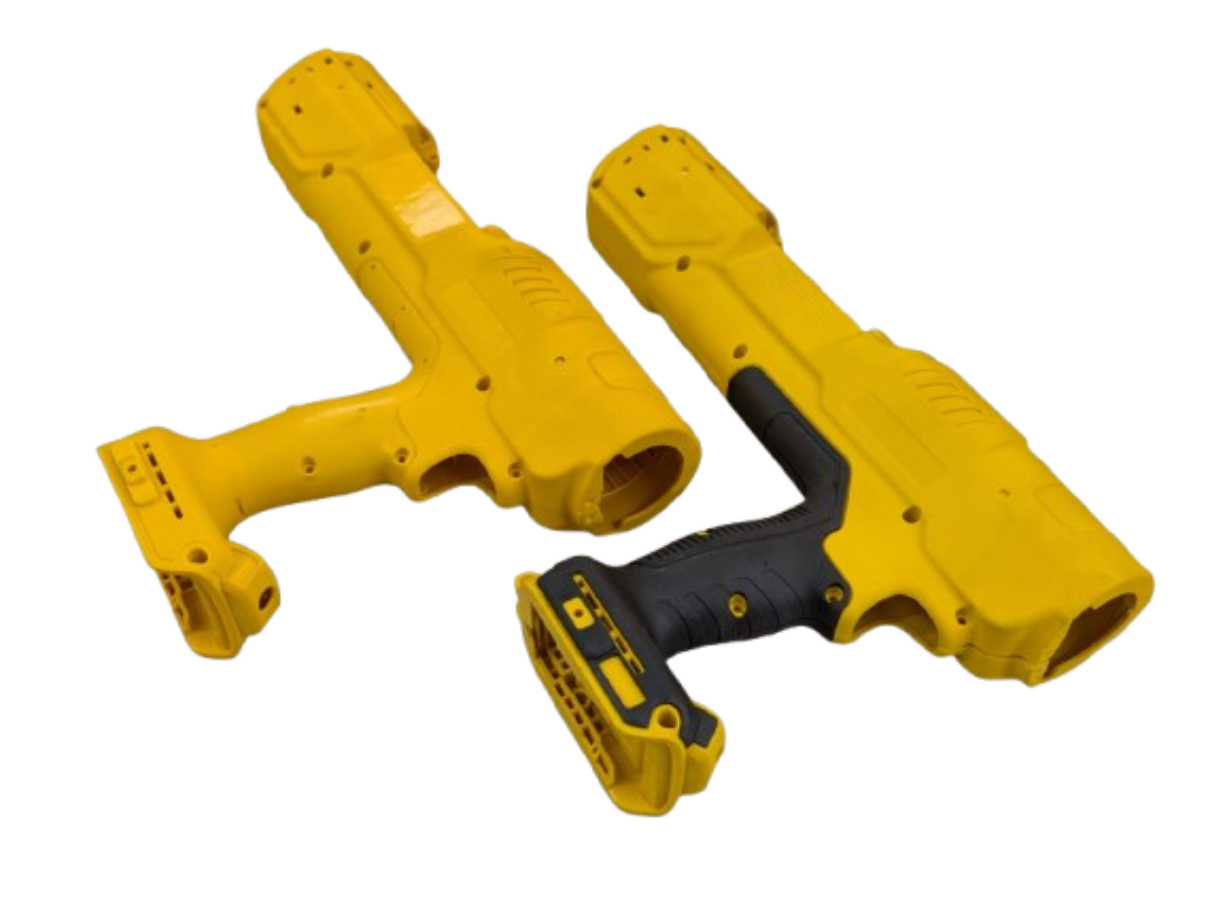
Common Applications of Overmoulding
- Hand tools – soft grips over rigid plastic or metal handles
- Medical devices – ergonomic grips or sealed housings
- Electronics housings – protective rubberised outer layers
- Automotive components – seals, vibration-damping features, and connectors
- Consumer products – toothbrushes, razors, and kitchen utensils
- Cable assemblies – strain-relief connectors and protective covers
- Industrial equipment – shock-absorbing or anti-slip surfaces
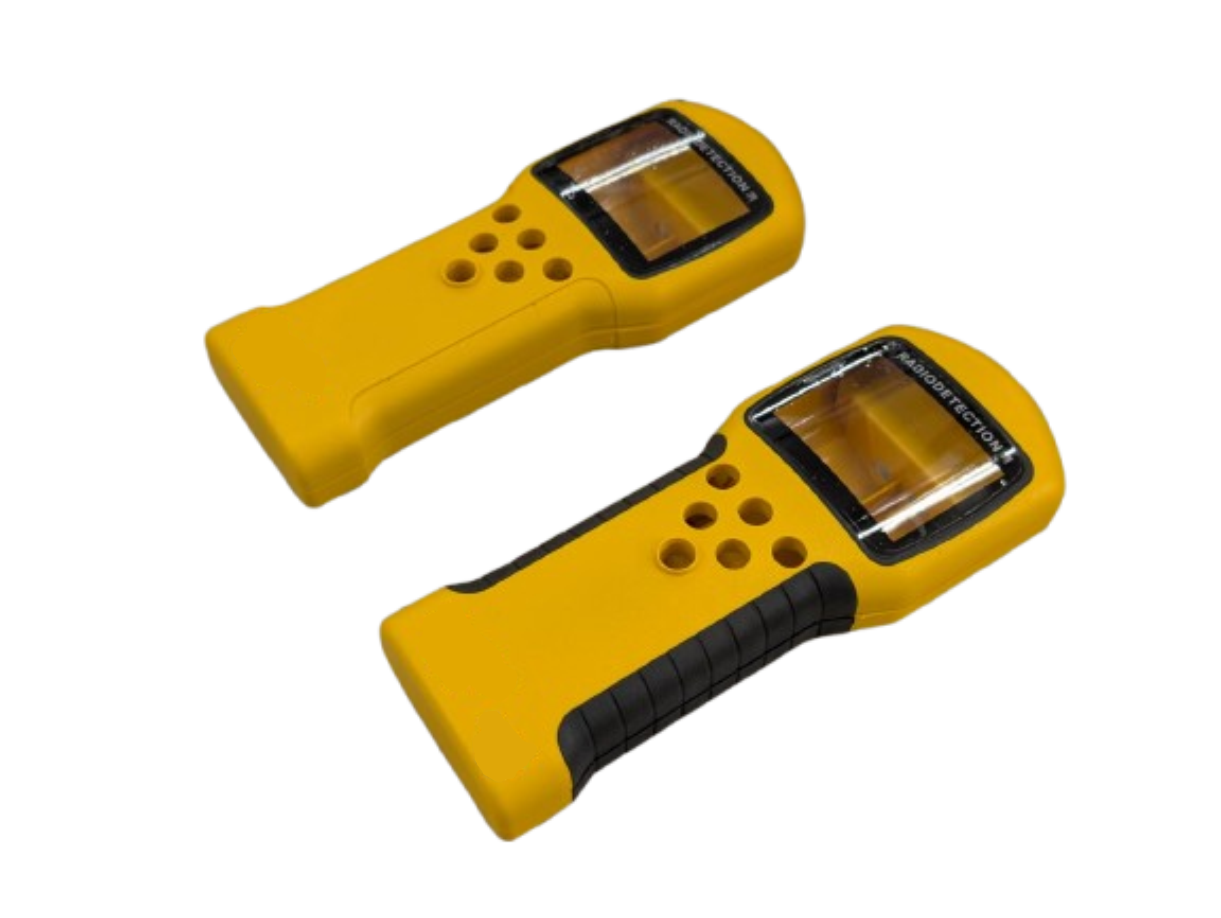
Advantages of Overmoulding
Improved ergonomics – softer materials provide better grip and comfort
Enhanced durability – protective outer layers increase wear and impact resistance
Better sealing – integrated soft materials can create water- or dust-resistant components
Reduced assembly steps – multiple functions combined into one moulded part
Improved aesthetics – allows different colours, textures, and finishes
Material optimisation – rigid and flexible materials can be combined for optimal performance
Lower manufacturing costs – fewer separate components and assembly operations
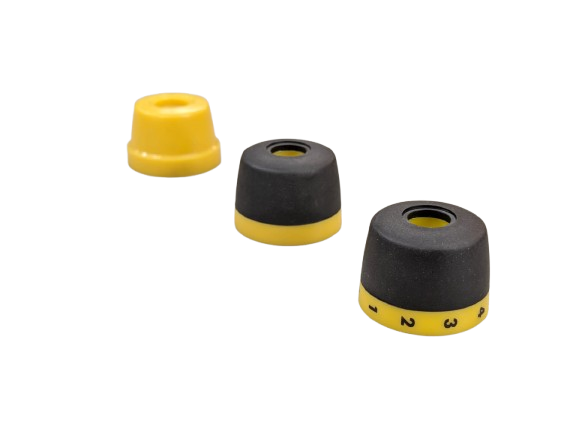
Overmoulding and Secondary Processes
Overmoulding is often combined with other secondary operations to add functionality or finishing features to a component. Processes such as pad printing can be used to apply logos or markings, while heat staking or insert installation can secure additional parts like inserts or housings. These additional processes help produce fully functional, ready-to-use components while reducing the need for complex assemblies.
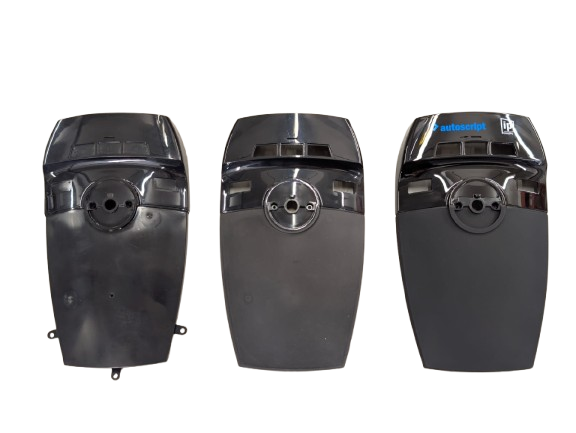
Exemplar piece
An example of a fully finished component produced using multiple manufacturing processes begins with injection moulding to create the base substrate. The part is then overmoulded with a secondary material to add functional features such as grip or sealing. After moulding, selected areas are precision milled to achieve tight tolerances or specific surface features. The component is then finished with a soft-touch spray coating to improve feel and user interaction, while the upper section is painted with a high-gloss finish for visual contrast. Finally, pad printing is applied to add logos, symbols, or product information, resulting in a high-quality, fully finished part ready for use.