
INJECTION MOULDING
Trusted by manufacturers for quality, consistency, and efficiency in every moulded part.
We offer a fully integrated tooling and injection moulding service, enabling seamless transitions from CAD design to finished part. With in-house mould design, machining, and testing, we guarantee shorter lead times, improved part performance, and total quality control throughout the manufacturing process.
Overview of Injection Moulding
Injection moulding is a widely used manufacturing process for producing complex plastic parts in high volumes. The technique involves melting polymers and injecting the molten material into a precisely engineered mould cavity under high pressure. Once cooled and solidified, the part is ejected, ready for further processing or use.
Material Melting and Injection
The process begins by feeding raw plastic pellets into a heated barrel where they are melted by a combination of external heaters and mechanical shear from a rotating screw. The molten polymer is then forced through a nozzle into the mould cavity. Accurate control of temperature and injection pressure is essential to ensure complete filling without defects such as short shots or burn marks.
Mould Design and Precision
The mould used in injection moulding is a critical component that defines the shape, surface finish, and dimensional accuracy of the final product. It is typically made from hardened steel and consists of two halves that close tightly to form the cavity. Moulds also incorporate features like cooling channels, ejector systems, and venting to enhance production efficiency and part quality.
Cooling and Solidification
Once the molten plastic fills the mould cavity, the cooling phase begins. Cooling channels embedded within the mould circulate coolant—usually water—to rapidly extract heat and solidify the polymer. Optimised cooling reduces cycle times and minimises warping or shrinkage, which are common issues in plastic manufacturing.
Part Ejection and Cycle Completion
After solidification, the mould opens and an ejection mechanism pushes the finished component out of the cavity. Ejector pins or plates are carefully positioned to avoid damage to delicate features. The mould then closes to begin the next cycle, with total cycle times ranging from a few seconds to several minutes depending on the part complexity and material used.
Quality Control and Process Optimisation
Injection moulding processes often employ real-time monitoring and simulation tools to maintain consistent quality. Parameters such as injection speed, pressure, and temperature are closely regulated. All our moulding machines are closed loop systems, continuously monitoring their own output and automatically adjusting their operation. Additionally, flow simulation software assists in mould design to predict and prevent common defects like weld lines, air traps, and sink marks.
Applications and Advantages
This process is ideal for producing large quantities of complex, high-precision plastic parts with excellent repeatability. Industries such as automotive, consumer electronics, medical devices, and packaging rely heavily on injection moulding for cost-effective and scalable production.
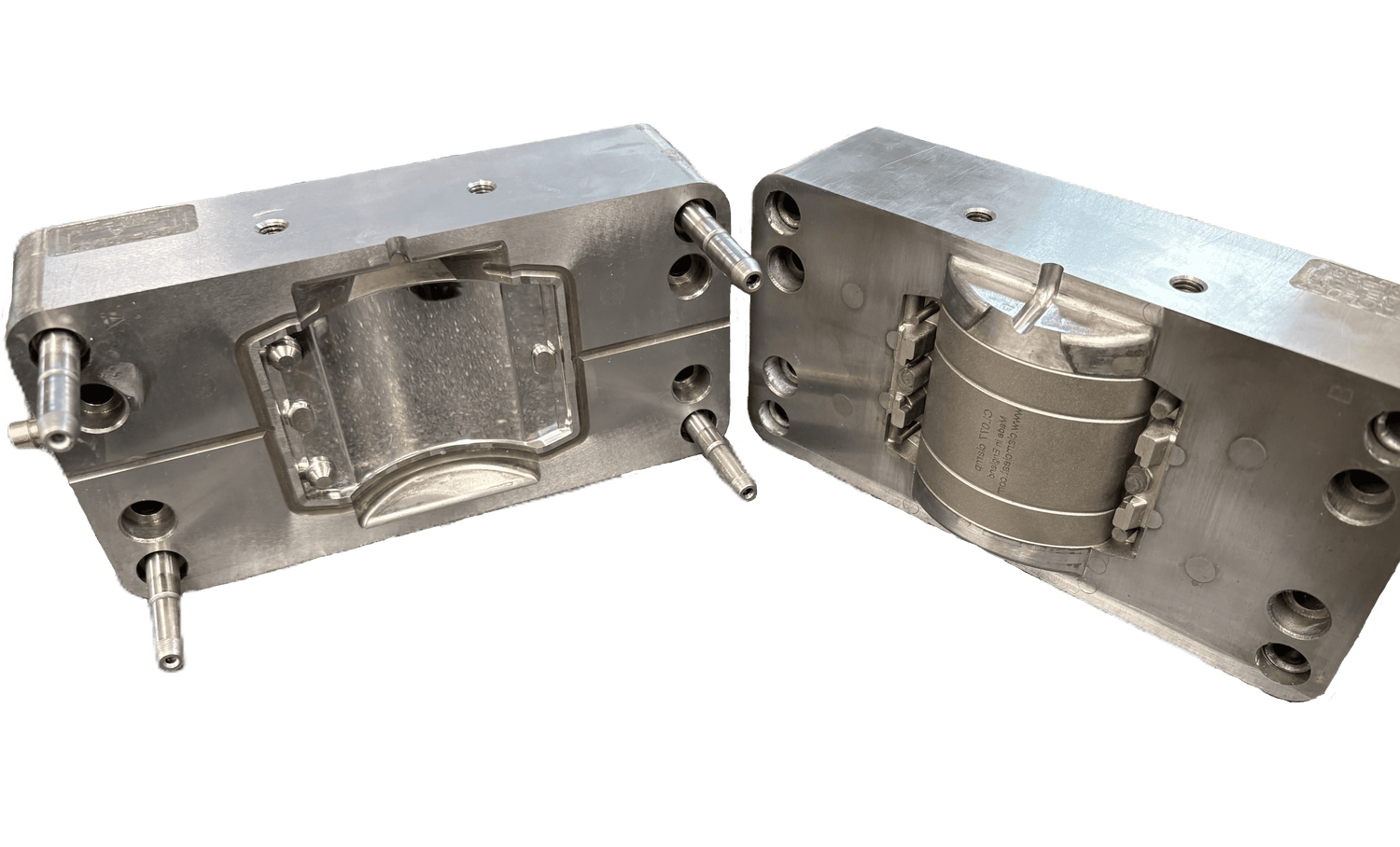
The right tools for the job
Whether you have an existing tool that you want us to use, or if you require one to be custom made, we can bring your product to life.
choosing the right materials
Selecting the appropriate material for an injection moulded product is essential, as different materials have unique properties—such as strength, flexibility, and resistance—that make them better suited for specific applications.
| Application | Material | Key Properties |
|---|---|---|
| Gears | Acetal | High precision, low friction, excellent dimensional stability |
| Electrical Components | Flame-Retardant Polyester | Electrical insulation, fire resistance |
| High-Impact Areas | 60% Glass-Filled Nylon | Exceptional impact strength and rigidity |
| Low Tolerance Applications | Acetal | Precise machining, dimensional accuracy |
| Low-Temperature Environments | Nylon | Toughness at low temperatures, good flexibility |
| High-Strength Requirements | 60% Glass-Filled Nylon | Superior mechanical strength and durability |
| Clear Transparency | Acrylic | Crystal-clear appearance, excellent optical clarity |
| Lightweight Components | HDPE (High-Density Polyethylene) | Lightweight, high toughness, chemical resistance |
| High Wear Resistance | Glass-Filled Nylon | Excellent abrasion resistance, long service life |
| Chemical Resistance | Polyester & Acetal | Resistant to various chemicals and solvents |
| Optical Clarity | Polycarbonate & Polyester | High transparency, impact and heat resistance |
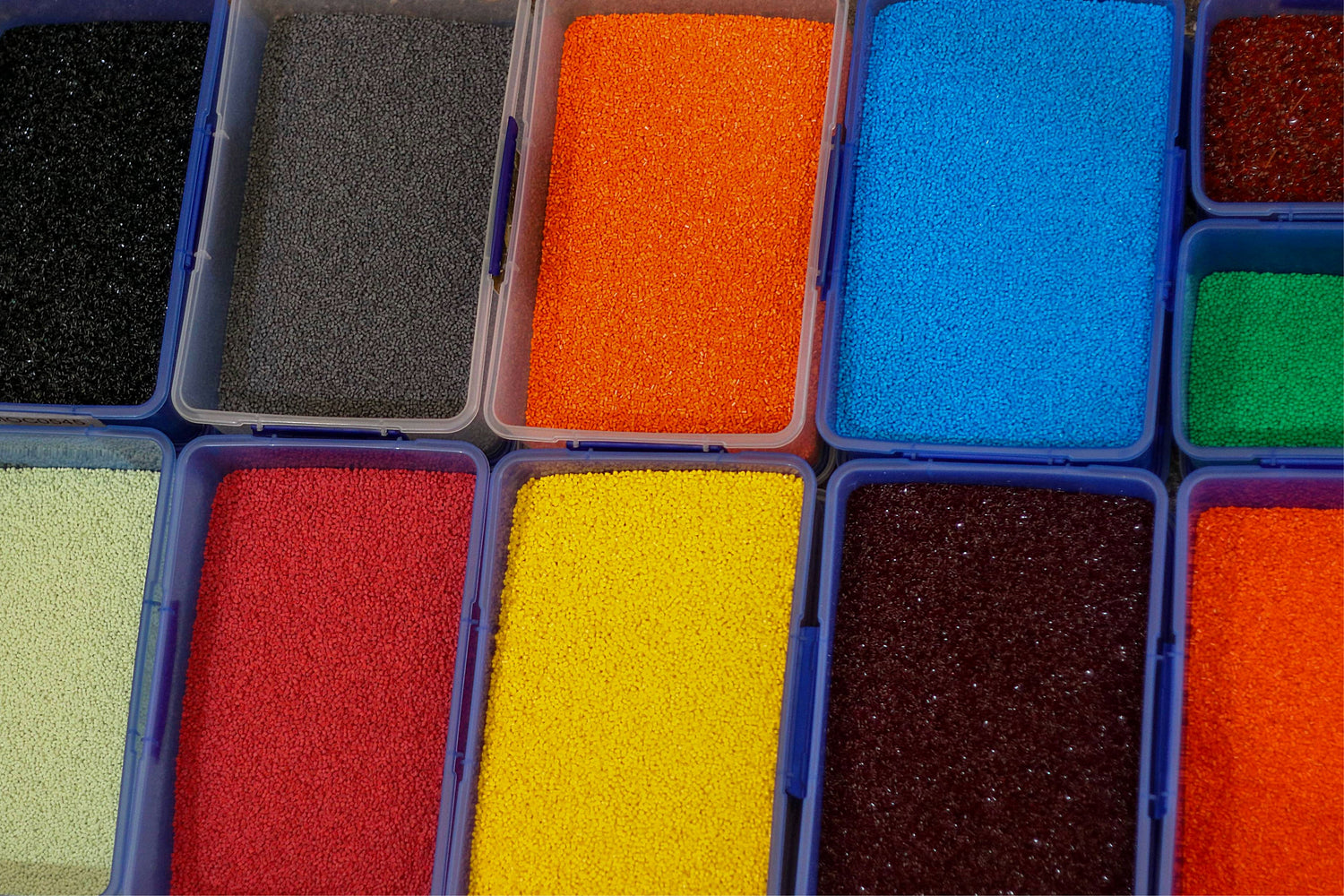
Colour Matching
We offer material colour matching, so your products reflect your brand.
Simply provide a colour reference and we can issue material samples within 2 weeks.
Experience you can rely on
We have extensive experience in the production of parts for all sectors of industry, ranging from marine leisure to the telecommunications industry, including automotive and pharmaceutical markets.
We have built a reputation for consistent quality and reliability of supply. To ensure we meet customer delivery requirements, we operate a bespoke production schedule. This allows us to plan exactly what materials, people and machinery are required for each order.
We mould a wide variety of technical parts, including insert-moulded and over-moulded parts, weighing between 1 and 950 grams (0.035 to 33.5 oz). Batch sizes typically range from 20 to 10,000 parts per order.
FAQs
How long does it take to make a tool?
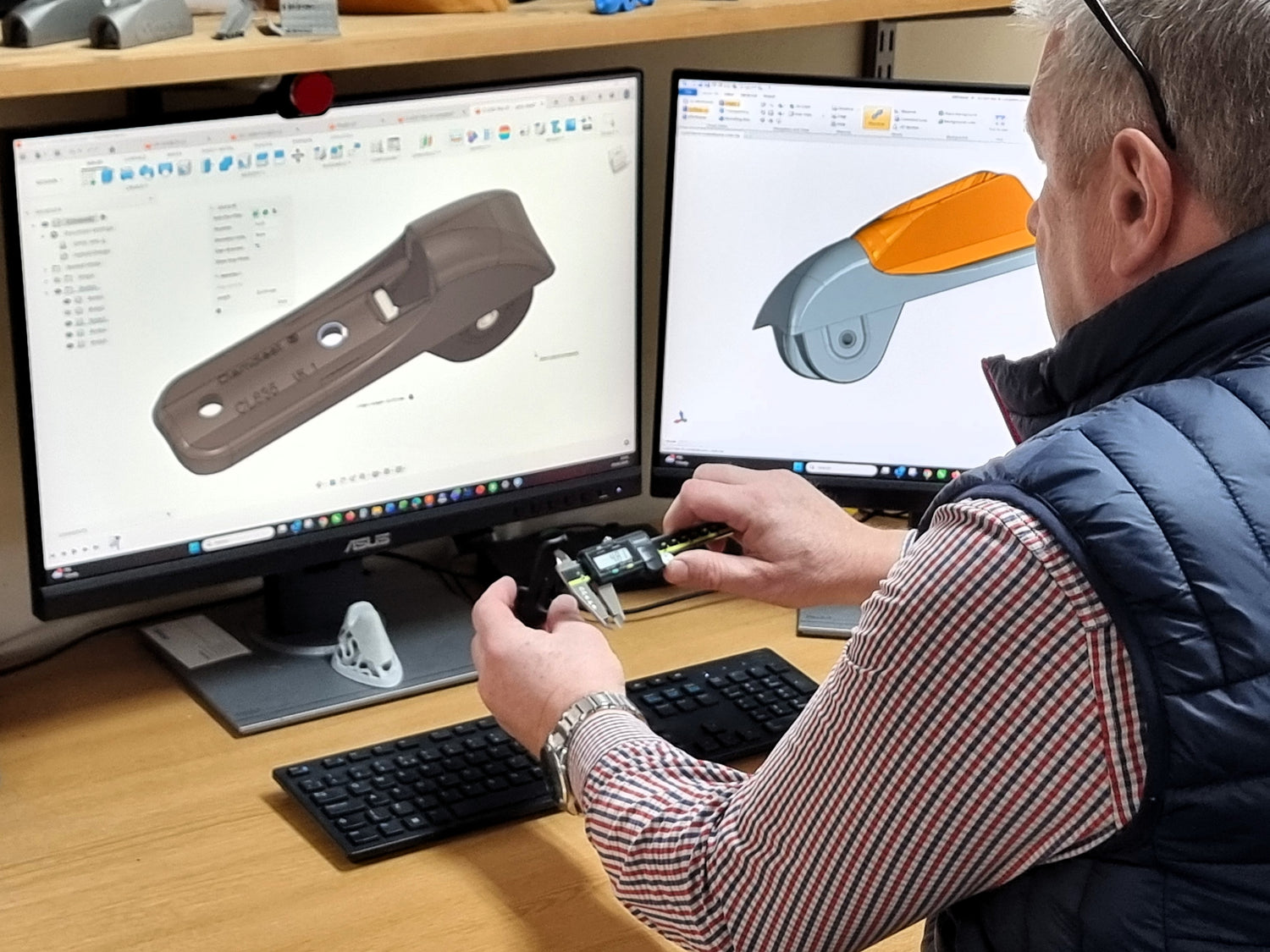
Once we've received the finalised CAD file, it takes approximately 12 to 16 weeks to complete.
How long does a tool last?
This depends on the material being used for the component (as some materials can be abrasive to the tool) and also which metal the mould tool is made from. In its lifetime, a tool will normally produce between 500,000 to 1,000,000 shots.
What is the minimum production run to make an injection mould tool viable?
Normally 5,000 pcs would be a minimum production run.
Can you match an existing colour of a product?
Yes. We offer a colour matching service which will identify an existing colour. We can also match most Pantone colours.
Is injection moulding the best way to make plastic components?
If you require small quantities of components (below 5,000 pcs) 3D printing might be more economical as there are no upfront costs, but the unit costs are higher. If you require 5,000pcs or more then Injection moulding will normally be more economical.
Do you ship to my country?
Yes. We ship orders worldwide.