
Post-processing for moulded parts
Technical characteristics cannot always be achieved during moulding and often require additional operations. Some of our secondary operations include:
Assembly
Traditional image with text section for versatile usage. Use content and layout options to fit your preferences.
Printing
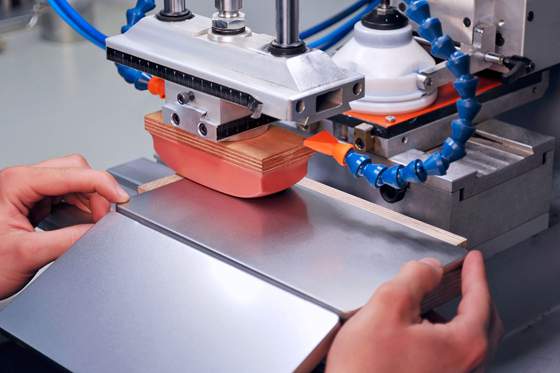
Printing is often applied as a secondary operation to add logos, instructions, part numbers, or decorative details to injection moulded parts. It provides a professional finish and can be customized to meet branding or functional requirements, enhancing both appearance and usability.
CNC Operations
NC (Numerical Control) milling is used as a secondary operation in injection moulded products to achieve high-precision modifications and complex geometries with excellent repeatability. Controlled by programmed instructions, NC milling allows for consistent, accurate machining of features like slots, contours, or holes that require tighter tolerances than moulding alone can provide. It's especially valuable for refining parts or adding intricate details in a cost-effective and scalable way.
Welding
Ultrasonic welding is used to join two injection moulded plastic parts together using high-frequency vibrations to create a strong, clean bond without the need for adhesives or fasteners. It’s ideal for assembling components with precision and speed, especially in applications where airtight or watertight seals are essential.
Heat staking & setting
Heat staking is used to join plastic parts to other materials, such as metal inserts, by using heat to soften the plastic and form a secure mechanical bond. It’s commonly used for embedding threaded inserts or creating permanent, tamper-resistant joints.
Heat setting is a process used to embed components—like metal inserts—into moulded parts by heating the insert and allowing it to be pressed into the plastic. As the material cools, it solidifies around the insert, creating a strong, durable hold that’s ideal for threaded or load-bearing connections.
Drilling
Drilling is used to add precision holes or features that can't be moulded directly due to design limitations or tooling constraints. It's ideal for creating mounting points, ventilation holes, or custom openings after the part has been moulded. This process ensures accuracy and flexibility, allowing for tight tolerances and tailored functionality in the final product.
Punching
We use punching to create clean, precise openings or cutouts that may be difficult or inefficient to mould directly. It’s especially useful for adding slots, holes, or vents in flat or semi-flat areas of a part. This process allows for quick, repeatable modifications while maintaining the structural integrity and consistency of the moulded component.
Turning
We can turn your products to achieve precise cylindrical features, such as threads, grooves, or smooth finishes on round components. It’s typically applied when tight tolerances or fine surface finishes are required that can’t be achieved through moulding alone. This process ensures accuracy and consistency, especially for parts that need to interface with other mechanical components.